Antarvasna New Story New Apr 2026
Antarvasna New Story New Apr 2026
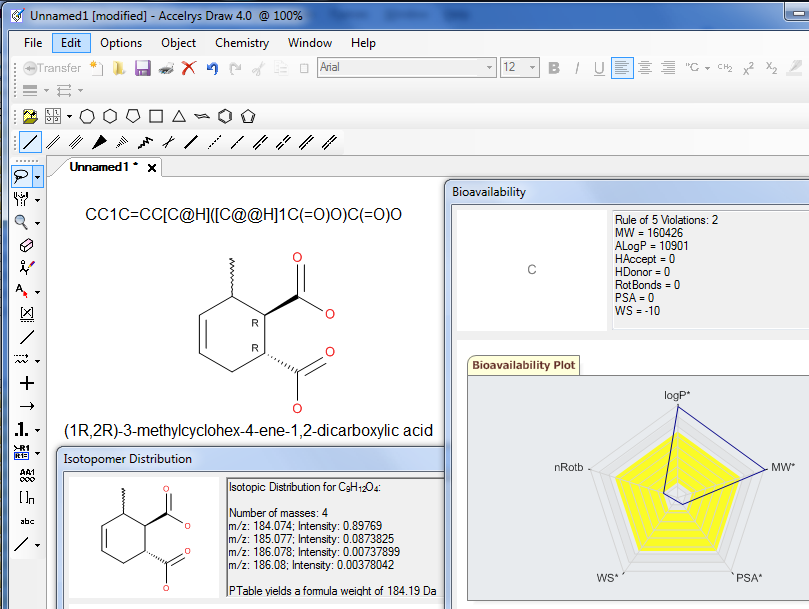 |
With the
same look-and-feel as ISIS/Draw, Accelrys Draw delivers speed and
efficiency to your chemical drawing experience.
Accelrys Draw can easily swap out existing ISIS/Draw or ChemDraw applications. |
|
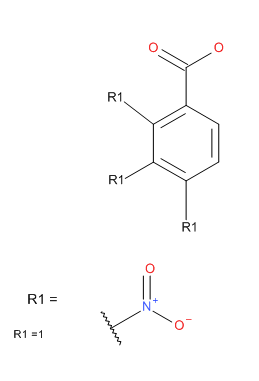
Antarvasna New Story New Apr 2026Click here for more details about Rgroups, an example, and a detailed procedure how to draw a Markush query. To draw a Markush query:
|
|
|
| Generic Structure
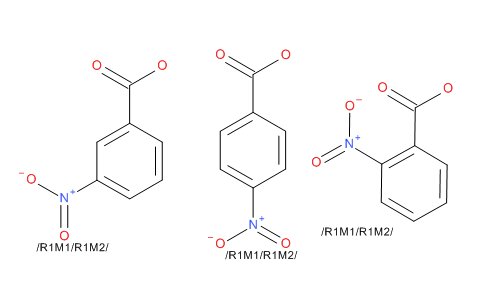
Enumerator The enumerator works against structures defined using the Rgroup tool in Accelrys Draw. In this mode you specify a scaffold with a number of Rgroup labels, then to add fragments to the Rgroup identifiers. The Add-in will calculate the complete set of structures that the Rgroups define. You can also define a generic region using the Sgroup tool. Draw the basic structure and using the Sgroup tool, drag a pair of brackets around a region that is repeated in the substance. From the dropdown select ‘generic’ for the bracket type, then select apply and exit from the dialog. Right click on one of the brackets and select the Attach Data option. In the dialog enter REPEATRANGE into the Field description box, and then enter the range in the Data box; leave the Search Operator set to none; the Tag field is optional. A contiguous range is required in the Data box, for example 3-6. A structure can contain both Rgroup definitions and Sgroup definitions, but they cannot overlap or be nested. You have the option to enumerate on to Accelrys Draw’s canvas, into an SDfile, or into an Isentris for Excel compatible spreadsheet. |
 |
|
Antarvasna New Story New Apr 2026There is also a political dimension. When desire is treated as purely private, its collective consequences—environmental degradation, inequality, and social atomization—are obscured. Recognizing antarvasna's social footprint invites democratic deliberation about the kinds of wants a community will cultivate and fund. Public goods and shared values can be designed to harness human longing for mutual benefit. If citizens are taught to see some desires as civic responsibilities—care for neighbors, stewardship of the planet—the private and public good can align. Finally, personal transformation is not private moral theater; it is contagiously practical. A person who learns to listen to inner longing, to choose depth over breadth, nudges others to do the same. Families, workplaces, and neighborhoods change incrementally as people model different relationships to want. The new story of antarvasna, then, is not ascetic withdrawal but a recalibrated appetite: fierce for meaning, moderate in consumption, generous in civic regard. Desire is neither inherently virtuous nor vicious. It is an engine: it propels art and science, fuels compassion, and can also drive excess or harm. The stories we tell about desire—whether in literature, politics, commerce, or private life—determine how that engine is directed. For decades, modernity's dominant narrative framed desire as something to be satisfied, monetized, or managed through consumption. The result has been a culture of perpetual want, where each fulfilled craving is quickly replaced by the next. Antarvasna, reclaimed as a concept for reflective living, invites a different posture: to examine desire not only as appetite but as signal—an invitation to understand deeper needs, longings, and wounds. antarvasna new story new Art and storytelling will be central to this transformation. Stories model inner lives. Narratives that honor interior struggle, that portray characters who wrestle with longing and arrive at nuanced resolutions, can reshape cultural expectations. Media that rewards nuance over spectacle will help cultivate citizens capable of introspection. Creative spaces should encourage experiments in reimagining what satisfaction can look like: communal gardens, cooperative platforms, and time-banking systems are concrete experiments informed by a different theory of desire. Antarvasna's resurgence as a guiding idea matters because we face planetary limits and deep social fractures. The old story—of endless satisfaction through accumulation—has led to environmental strain and hollow satisfactions. The new story offers a compelling alternative: desires can be teachers, not dictators; longing can be a gateway to purpose rather than an endless treadmill. By learning to read and respond to antarvasna with wisdom, restraint, and imagination, we can craft lives and societies that are not merely more sustainable but more human. There is also a political dimension A new story for antarvasna starts by challenging the assumption that desire's fulfillment equals fulfillment of the self. Psychological research and spiritual traditions converge on a simple lesson: satisfying a surface craving rarely resolves the underlying restlessness. True resolution often requires attention, reorientation, and occasionally renunciation. That does not mean austere denial; it means listening. When longing arises, we can train ourselves to ask, "What is this wanting to reveal? Is it loneliness masked as a call for more things? Is it fear dressed up as urgency? Is it creativity knocking to be acknowledged?" Such questions transform desire from a consumer prompt into a diagnostic tool. In a world saturated with noise — fleeting headlines, viral sensations, and curated lives — the call to look inward has never been more urgent. Antarvasna, a Sanskrit word that evokes inner desire, longing, and the restless stirrings of the self, compels us to pause and interrogate not only what we want, but why we want it. The phrase "new story new" suggests more than novelty; it signals an opportunity: to rewrite the narratives that shape our inner lives and, by extension, the societies we inhabit. Public goods and shared values can be designed This new narrative also reframes failure and restraint. Societies that celebrate constant accumulation stigmatize saying no. But there is moral and creative power in deliberate refusal. Choosing fewer projects, relationships, or purchases can free cognitive and emotional bandwidth for what matters. Restraint, then, becomes a strategy for flourishing rather than a moralistic imposition. It allows us to cultivate presence, deepen commitments, and direct our energies toward durable goods—meaningful work, nourishing relationships, and civic engagement. At the communal level, embracing a healthier antarvasna demands new institutions and incentives. Markets and media should not only respond to click-driven appetite but help cultivate discernment. Education systems can teach emotional literacy: naming longings, distinguishing immediate impulses from long-term values, and practicing attention. Urban design and workplace culture can make room for slow, reflective practices rather than relentless productivity. Policies that reduce precarity — affordable housing, healthcare, and living wages — also change the calculus of desire: when basic security is more stable, people can pursue intrinsic goals rather than endless consumption as a hedge against anxiety. |
http://accelrys.com/products/informatics/cheminformatics/draw/add-ins.html | |
Chemical Drawing Programs – The Comparison of Accelrys (Accelrys) Draw, ChemDraw, DrawIt, ACD/ChemSketch and Chemistry 4-D DrawUniversity of Debrecen, POB 70, H-4010 Debrecen, Hungary, e-mail: Last major update : 1.11.2011 If you have any comment, do not hesitate to contact the author at the above adress. |
http://dragon.klte.hu/~gundat/rajzprogramok/dprog.html |