from cryptography.hazmat.primitives import padding from cryptography.hazmat.primitives.ciphers import Cipher, algorithms, modes from cryptography.hazmat.backends import default_backend import base64 import os
# Example usage if __name__ == "__main__": # Assuming these are your inputs encrypted_link = "your_base64_encrypted_link_here" encryption_key = b'your_32_byte_key_here' iv = b'your_16_byte_iv_here'
def decrypt_data(encrypted_data, key, iv): cipher = Cipher(algorithms.AES(key), modes.CBC(iv), backend=default_backend()) decryptor = cipher.decryptor() decrypted_padded_data = decryptor.update(encrypted_data) + decryptor.finalize() unpadder = padding.PKCS7(cipher.algorithm.block_size * 8).unpadder() return unpadder.update(decrypted_padded_data) + unpadder.finalize()
from cryptography.hazmat.primitives import padding from cryptography.hazmat.primitives.ciphers import Cipher, algorithms, modes from cryptography.hazmat.backends import default_backend import base64 import os
# Example usage if __name__ == "__main__": # Assuming these are your inputs encrypted_link = "your_base64_encrypted_link_here" encryption_key = b'your_32_byte_key_here' iv = b'your_16_byte_iv_here' decrypt localtgzve link
def decrypt_data(encrypted_data, key, iv): cipher = Cipher(algorithms.AES(key), modes.CBC(iv), backend=default_backend()) decryptor = cipher.decryptor() decrypted_padded_data = decryptor.update(encrypted_data) + decryptor.finalize() unpadder = padding.PKCS7(cipher.algorithm.block_size * 8).unpadder() return unpadder.update(decrypted_padded_data) + unpadder.finalize() from cryptography
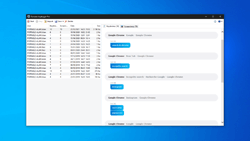
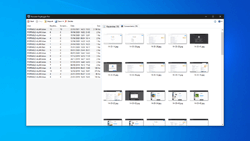
Revealer Keylogger is compatible with Windows 11, 10, 8.1, 8, 7 and Vista, in 32 or 64 bit version. The screenshots feature requires at least 1 GB of disk space.
Administrator rights and an Internet connection are required during installation.
Windows 10 compatible