The narrative never romanticizes puberty as a sudden transformation into adulthood. Instead it treats change as cumulative: mornings of new acne, nights of restless sleep, friendships shifting like sand. There are moments of humiliation — a gym class where a boy’s change in voice becomes an accidental spotlight; a girl’s first period at an inconvenient time — and moments of delight — a first crush that makes a late-night walk feel cinematic, or the absurd triumph of finally mastering deodorant application. These scenes are rendered with humor and empathy, avoiding melodrama while honoring intensity.
The film begins with a single hum — the steady, almost imperceptible vibration of a school corridor just before the bell. Light shifts across the linoleum, catching dust motes that hang like tiny planets. Into this ordinary architecture walks Maya, thirteen, and Tomas, twelve — two lives on adjacent orbits, each pulled by the same invisible force: puberty. The narrative never romanticizes puberty as a sudden
Throughout, the story insists on dignity, clarity, and compassion: puberty is a shared human experience, neither catastrophe nor triumph but a threshold that can be crossed with information, empathy, and community. These scenes are rendered with humor and empathy,
Outside school, the town hums with its own rites of passage. A neighborhood soccer game becomes a study in bravado and vulnerability: Tomas, newly awkward, discovers an ally in Miguel, whose easy grin masks his own doubts. Maya finds refuge at the library, where she devours a battered paperback that offers the language she lacks for what she’s feeling. Both learn how quickly knowledge can unarm fear. At a family dinner, Maya’s older cousin speaks candidly about menstrual cups and body image; Tomas hears, for the first time, that men’s bodies can be complicated too. Small, brave conversations ripple outward: a grandmother’s curt wisdom about “skin and seasons,” a sister’s blunt text at midnight, a doctor’s careful answers. Into this ordinary architecture walks Maya, thirteen, and
Tomas experiences change as a series of small betrayals. His voice, which used to be reliably his, stutters and drops, refusing to obey; laughter sometimes breaks into a higher, foreign note. One morning he finds a soft, wet stain on his pyjamas and freezes as if the world had narrowed to that single mark. He is embarrassed and fascinated in equal parts, flipping through a textbook he never noticed before. His father, awkward and tender, gives him deodorant and a half-explanatory talk about “growing up,” which lands like a thrown sheet — protective but not entirely covering the questions underneath.
Medical accuracy is woven into the human story. Conversations about hormones are specific without being clinical: estrogen and testosterone as messengers that rewrite the maps of mood, hair, and growth. Practicalities are handled with dignity: how to use a tampon, where to seek contraception, what to do with persistent acne. Resources are mentioned matter-of-factly — trusted adults, school nurses, community clinics — and the film normalizes asking for help.


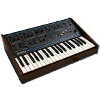 Synth a tastiera
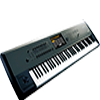 Workstation a tastiera
 Pianoforti da palco
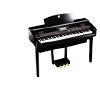 Pianoforti con mobile
 Arranger a tastiera
 Master Keyboard
 Expander
 Campionatori / Groove Box
 Amplificatori per tastiera
 Hammond e organi elettronici
 Organi Classici
 Pedali per tastiere e piano
 Pedali ed effetti per tastiera
 Stand e Supporti
 Custodie per tastiere
 Sgabelli e panchette
 Schede di espansione
 Cavi, adattatori e accessori per tastiere
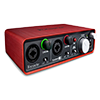 Schede audio / Interfacce Midi
 Monitor da studio
 Cuffie da studio
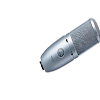 Microfoni da studio
 Processori / Preamplificatori
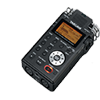 Registratori digitali
 Software e PlugIn
 Master Keyboard e Controller Midi
 Mobili da studio
 Cavi, adattatori e accessori per studio
 Mixer Analogici
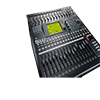 Mixer Digitali
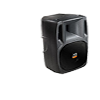 Casse attive
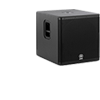 Subwoofer
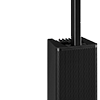 Sistemi a colonna
 Preamplificatori / Effetti / Equalizzatori
 Microfoni per Live
 Microfoni per telecamera
 Radiomicrofoni
 In-Ear Monitor
 Karaoke
 Strumenti a fiato
 Violini e viole Elettrici
 Luci ed effetti visivi
 Supporti, cavi e accessori per live
 Lettori CD/MP3 per DJ
 Console / Controller
 Giradischi e Testine per DJ
 Mixer per DJ
 Software DJ
 Effetti per DJ e Groove Box
 Cuffie per DJ
 Custodie e Flight case
 Cavi, adattatori e accessori per DJ
 Batterie elettroniche
 Batterie acustiche
 Drum machine
 Accessori per batterie
 Microfoni per batteria