
Our Google Maps scraper tool makes it easy to extract data from Google Maps quickly and efficiently. Try it for free.
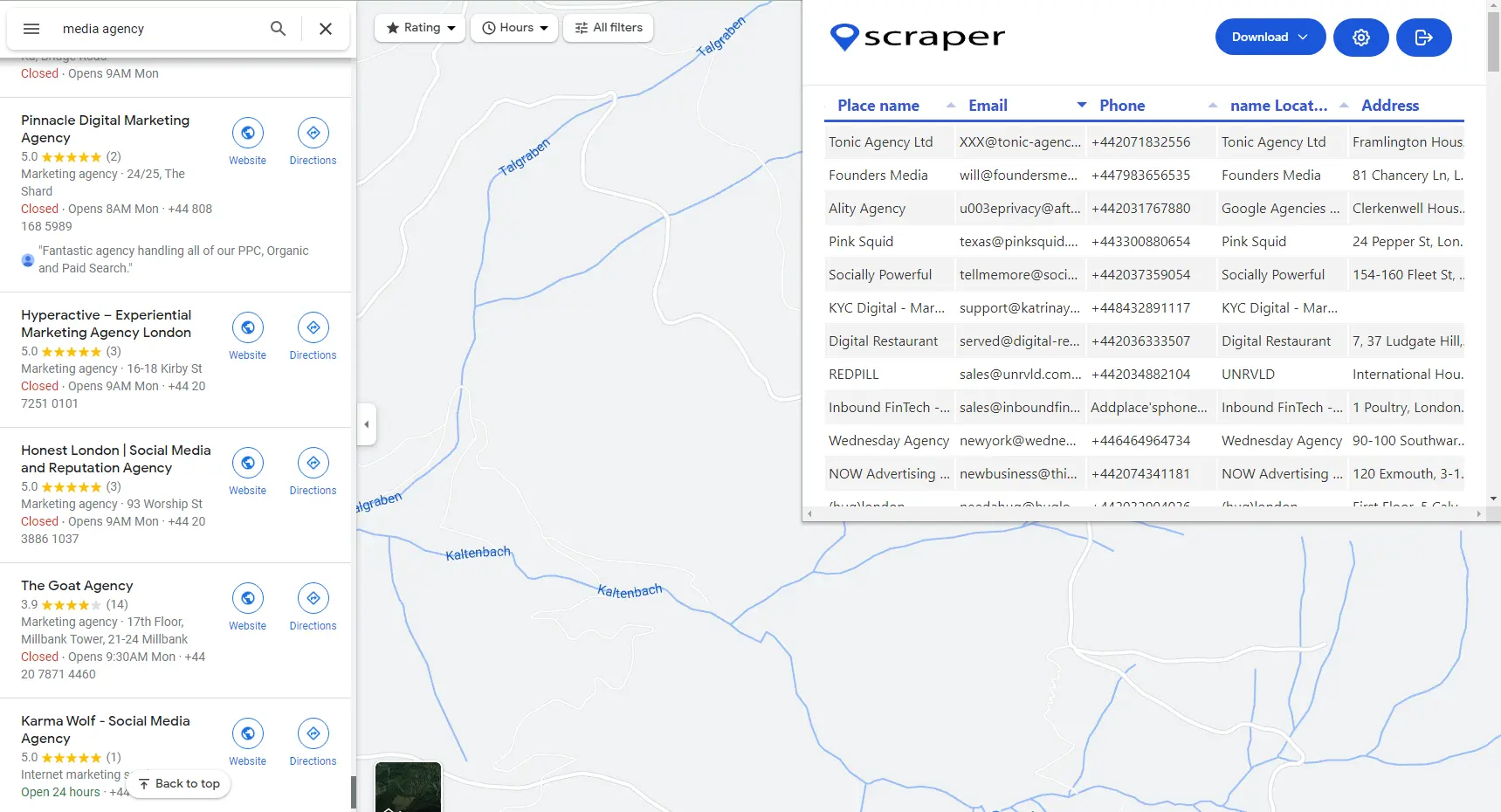
Easy to use, our Google Maps Scraper tool is user-friendly and does not require any technical expertise to use. This makes it easy for anyone to collect and analyze data from Google Maps.
Manually collecting data from Google Maps can be time-consuming and tedious. A scraper tool can automate the process and extract the data much faster, saving you time and effort..
More info
A scraper tool can extract a wide range of data from Google Maps, including information such as business names, email, phone number, addresses, ratings, reviews, and more.
More info
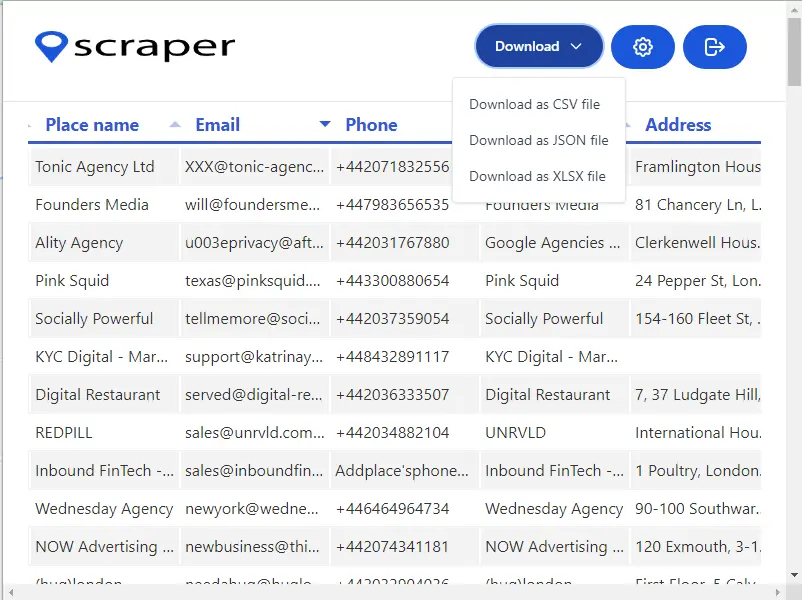
Take control of your data with our Google Maps scraper tool. With the ability to export extracted data in a variety of formats, such as CSV, Excel, or JSON, you'll be able to use your results with other applications or analysis tools to get the most out of your data. Whether you're looking to gain insights, create reports, or integrate your data with other systems, our tool has you covered. Don't let your data be trapped in one place - start getting the most out of it today!
More infoWindows 96/Neptune may have been a footnote in the history of Microsoft, but it represents an interesting chapter in the evolution of the Windows operating system. Its cancellation allowed Microsoft to focus on more successful projects, but it also laid the groundwork for future innovations that would shape the industry. Today, Windows 96/Neptune remains a fascinating example of what could have been, a reminder of the company's willingness to experiment and innovate.
In the mid-1990s, Microsoft was on top of the world. Its Windows 95 operating system had just been released to great fanfare, and the company was riding high on the success of its Office software suite. But as the company looked to the future, it began to experiment with new ideas and technologies that would eventually give birth to a short-lived but intriguing operating system: Windows 96, also known as Windows Neptune. windows 96net
Announced in 1996, Windows 96, codenamed Neptune, was a consumer-focused operating system designed to succeed Windows 95. It was the first operating system to be built on the Windows NT kernel, which would become the foundation for future Windows versions. Neptune was designed to be more stable, secure, and user-friendly than its predecessor, with a focus on multimedia and internet capabilities. Windows 96/Neptune may have been a footnote in
Although Windows 96/Neptune never made it to market, its legacy lives on. The technologies developed during the Neptune project were incorporated into future Windows versions, including Windows 2000 and Windows XP. Additionally, the project's focus on multimedia and internet capabilities helped shape the direction of future Windows releases. In the mid-1990s, Microsoft was on top of the world